
An in-between leader
Rooted Here
I’m Garnett Humenick. I was born in Cordova Bay, and I’m raising my two kids in the Strawberry Vale community. Saanich taught me the value of neighbours, relationships, and showing up for one another.
As a spouse, a past small business owner, a Scout leader and a mixed urban Indigenous woman, I’m a new voice for Saanich, and I’m not going anywhere!
This community helped shape me, and I’m honoured to be part of it.
Garnett Humenick
Why an
In-Between Leader, Why Now
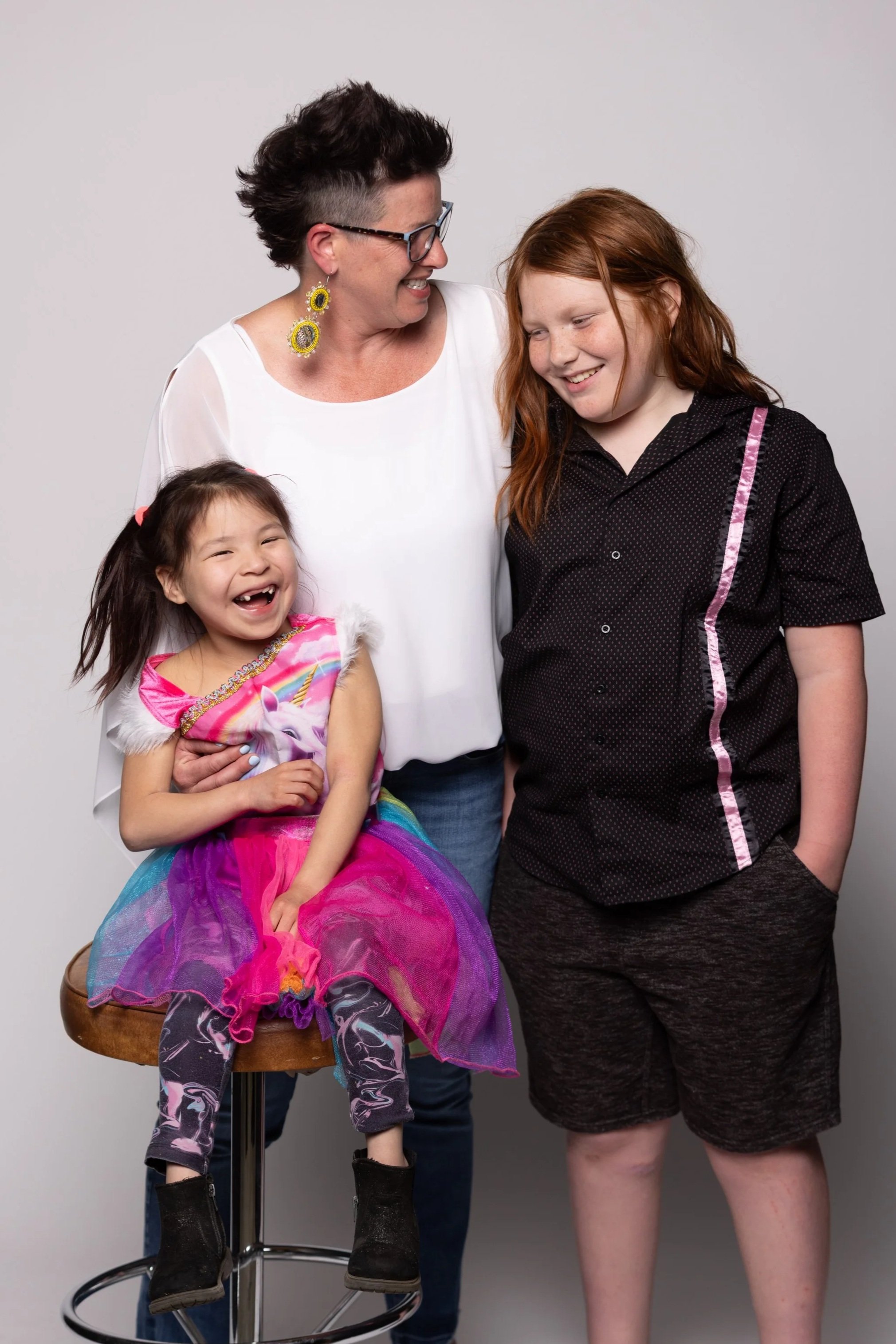
I believe communities get stronger when people choose to show up for one another.
In the Strawberry Vale community, renters and owners a block apart are living two different versions of Saanich. The restaurant space in our plaza has turned over five times since COVID. The teachers and support staff at our school drive in from the western communities because they can’t afford to live here, then give up their lunch breaks to run chess club for our kids.
But Saanich is not broken.
A mom at our PAC brought up a crosswalk, neighbours helped point her the right way, and now there’s an advanced walk signal at Wilkinson and Santa Rosa. That’s Saanich!
For twenty years in film, I kept people safe and fed. I was the first aid attendant and the one with the sandwiches, so I heard everything. When the crew thought the wind was too high to work safely, they’d tell me instead of the boss, because saying it themselves could cost them the job.
So I became the mouthy girl with the sandwiches and coffee, saying it for them!
Turns out there’s a word for that. I’m an in-betweener.
I’m mixed urban Indigenous. I’ve run my own small business, and I’ve sat at the bargaining table across from the Hollywood studios. My husband and I own our home, and plenty of our friends and family wonder if they ever will.
Nobody I know fits in a box.
Here’s what I bring, title or not:
Six years as a Scout leader with 3rd Arbutus, from Beavers up to Cubs
Raising money for charities that support women and kids with my women’s group, Bastion No. 4
Ten years chairing my department in the film union, plus helping start our Women’s Committee and bring mental health first aid into our local
A delegate seat at the 2026 BC Federation of Labour convention, chosen by my local
Training as a First Nations family support worker, so I know how hard it is for families to find help before things hit a crisis
Labour College of Canada research on whether reconciliation promises turn into real jobs for Indigenous workers
6,405 votes my first time on a ballot
If I know something, I’ll tell you straight. If I don’t, I’ll tell you that too, and then I’ll go find out.
This fall I learned more about bike lanes and off-leash dogs than I ever thought possible. Mostly, I learned we’re neighbours first. We spend so much energy picking a side that we forget we want the same things.
That’s why I’m still here, wrangling Cub Scouts, sitting in union halls and perched on a tiny chair at PAC meetings. When things get heated, I still bring the snacks!
I love Saanich. I want the roots already here to stay put, and new people to be able to put roots down too.
What Our Community Is Teaching Me
Every amazing conversation this fall led to another.
Here’s what I’m learning so far; the list will keep growing as I hear from more neighbours, workers and families!
-
Housing affects every family. It decides whether young adults can stay close to family, whether seniors can age in place, and whether working families can stay in the community they love.
At the UVic forum, students told me they don’t need a plan for 2030. They need a place to live in January.
My husband and I bought our first home in 2010, and like a lot of homeowners, we’ve benefited from rising values. I want the people coming up behind us to get that same shot.
Some of the homes we need are already here! Suites sit empty all over Saanich, and a lot of them stay that way because one bad renting experience scared a family off. Let’s make it easier and less risky to rent them long term, and to add a suite or garden home without a long permit fight.
Let’s bring churches, non-profits, governments, builders and residents together on deeply affordable housing, and back local builders making homes that fit the neighbourhoods they’re in.
We don’t have to choose between housing and neighbourhoods.
-
My husband TJ runs a renovation business, so a lot of our kitchen table talk is bids and permits. Who’s available, what the tile guy quoted, how long the paperwork is going to sit.
Every month a project waits, it costs more, and somebody always pays for it, whether it’s a family adding a suite for aging parents or a small crew trying to make payroll.
Saanich has started fixing this. Permits went digital in 2025, and a pre-application step now catches problems early. Let’s keep going and measure it:
Post how long each type of permit takes, so families and crews can plan.
Work with staff on realistic targets, aiming at 30 days for a suite and 180 for a big build, and report when they’re missed.
One clear set of rules for what a suite or home upgrade needs, applied the same way every time.
In my neighbourhood, a woman keeps her coffee counter going by subletting part of it to two guys making tacos. Saanich should make that kind of creativity easier. Simpler business licences. Easier permits for vendors, street performers and neighbourhood events. A public booking system for Saanich spaces, from film trucks needing power to a small group needing a room. Busy places are safer places!
A lot of our friends and family are in the trades. When a job goes off-island because the bid came in cheaper, that’s someone I know not getting the call. Saanich already buys local on smaller purchases, where trade agreements allow. Bigger contracts can still reward apprenticeships, fair wages and local training, including for Indigenous workers. Let’s use every bit of that.
Staff aren’t the problem. They need clear direction and the resources to do the job.
Let’s keep our local friends working!
-
As a parent, I’ve spent plenty of mornings refreshing registration pages at six, because summer camps are childcare for a lot of us. The programs families want fill in the first minute, and the family that gets in is the one with a credit card saved and a free hand at six. One room for D&D, gone at 6:01.
So one of the moms found a Dungeon Master herself and booked a room at Cedar Hill. My kiddo is loving it!
Families aren’t quiet because they don’t care. They’re quiet because they’re working. And when Saanich makes it easy, parents build what their kids need.
Fixes I’d love to see:
Swim registration at 6 p.m. instead of 6 a.m. Swimming is a lifesaving skill.
One approval that carries. A family that’s already proved it for L.I.F.E. shouldn’t have to keep proving it for every program, every season. And a way in for the family whose hard year doesn’t show up on last year’s paperwork.
A share of lesson and program spots held for L.I.F.E. families.
The Summer Swim ’n’ Skate Pass, year round. Low cost, no paperwork!
Saanich rooms at a rate parents can afford, without a six-month runaround, so a parent can start a playgroup or a game night.
Programs when families can come. Sunday mornings work. Weekday evenings don’t.
A short weekly blurb from Saanich for the school newsletters families already read. No new work for the school.
More sidewalks, a bike ramp, a basketball court.
Free transit for teens. Saanich has already asked the province to extend it to 18. Let’s get it done!
More community garden plots, with a way in that isn’t a long waitlist.
Not every kid is a sports kid. A room, a leader, a table. Those programs don’t bring in much revenue, and that isn’t the measure. A kid with somewhere to go on a Wednesday is worth it to all of Saanich.
-
Like many families, we make decisions in our home based on what we can pay. Groceries cost more. Hydro costs more. Insurance costs more. Property taxes are part of that conversation too.
In 2026, Saanich property taxes went up 5.35%, about $215 for the average home and about $465 once utilities are included. New construction added less than half a percent in new tax. Growth alone won’t fix the bill.
TJ will tell you what happens when someone puts off the roof to save money. They end up paying for the roof, the ceiling and the drywall. Pipe works the same way. Putting it off is the most expensive way to look thrifty, and paying for it now means our grandkids don’t pay for it later, with interest.
What I want to see:
Property taxes kept in line with inflation, or lower.
Every increase above inflation and population growth explained in plain words: why, and what we get for it.
Before asking residents to pay more, a hard look at whether every project is delivering value.
A look at which contracted-out jobs could come back in house.
No balancing the budget by cutting the people who already work here. They’re our neighbours.
Working with other councils through UBCM so housing, mental health and addiction costs don’t land on property tax alone.
Going after every provincial and federal dollar for the pipes and roads growth needs.
The same test for the CRD. Regional water and sewer costs land on our utility bills too.
Families, seniors, renters and homeowners are all feeling the squeeze, and council decisions should reflect that.
-
I live at the five-way intersection at Interurban and Wilkinson. Like a lot of parents, I’ve stood at that crosswalk wondering how much longer we’re going to wait for fixes everyone already agrees on.
Saanich has started. The Interurban Wilkinson Project is gathering ideas now, with construction expected around 2030 to 2032. I want it planned as a whole corridor. Helmcken runs into View Royal, so retiming our lights without matching theirs at Burnside just moves the traffic jam. And the fix can’t block driveways up Hastings or send traffic past a school with no sidewalk.
My kids need to get around safely on foot, by bike and by bus. My husband TJ drives a truck to job sites across the region for his renovation business. For most families, getting around can’t be either-or.
From what I’ve heard, here’s what I think should be part of the conversation:
No to taking away traffic lanes for bike lanes. Yes to adding or widening bike lanes where there’s room. And no ripping out lanes we’ve already paid for, because that spends the money twice.
Real consultation before the shovels come out. Mann Avenue residents got a few days’ notice before losing all their street parking. I think there’s a low-cost way to make one side of Mann a two-way bike lane and bring back some parking.
Finish the missing links, starting with crossings that put people back into traffic. The ride from Strawberry Vale to Layritz or Commonwealth is pieced together from unfinished lanes on Wilkinson, so the shortest route is the most dangerous one.
Temporary speed bumps where drivers cut through school zones. Ask the PACs first. Parents already know which corner it is.
Rural roads like Old West Saanich and Spartan have no shoulders and no sidewalks. The fix has to fit the road, worked out with the people who live on it, with every provincial safety dollar Saanich can match.
Check every fix for where traffic goes next. Calming one street can push speeding into the next school zone, cost parking, or leave a side street unsafe to walk.
Plan with our neighbours and the CRD so signals, bus stops, bike routes and truck routes line up at every municipal line.
Move buses out of traffic with bus priority on Saanich’s busiest shared corridors.
Back our transit workers. Make the schedule real, with time for a meal and a washroom. Drivers are humans first.
Residents already know where the problems are. Let’s get the projects everyone agrees on across the finish line.
Connected, and built to be used!
-
Mental health, addiction, homelessness and family stress show up in every neighbourhood. The earlier people get support, the better it goes.
I worked as a First Nations family support worker, walking alongside families trying to get through schools, support services and government systems while life piled up. One thing I learned early is that people often know they need help long before they know where to find it.
So let’s get schools, health services, community organizations and governments working together, so people find help earlier and fewer fall through the cracks.
Ideas that keep coming up in my conversations:
A civilian crisis team for Saanich, like the one in Victoria, pairing a mental health worker with someone who’s been there. Saanich police answered 462 Mental Health Act calls in 2025.
Island Health workers on crisis calls. Saanich police have asked for them, and Saanich should keep pressing the province until it happens.
Somewhere for people to go. Supportive housing in Saanich, with a path to holistic, community-based healing for addiction and mental health.
No moving people along with nowhere to go. When someone is ready to change, or about to lose everything, they need a place to land and the tools to make that change last.
A sit-down with outreach workers and shelter operators to find what’s already here and not being used.
Food support without shame. Partner with grocery stores so hampers are easy to organize, easy to staff, and easy to pick up with your head held high.
Lighting on walking routes, so the whole community feels safe, including people with no bed for the night.
When someone in crisis has nowhere to go, the call goes to a uniform. That’s the most expensive and least useful answer we have. Housing people is cheaper in the long run, takes strain off services and makes more taxpaying neighbours.
-
I understand why people feel protective of Saanich. I feel that way too.
I was born here. I grew up here. I chose to come back here to raise my family.
People love our parks, trails, beaches, green spaces, and neighbourhood character. We don't have to choose between welcoming new neighbours and protecting the things that make this place special.
Let's plan growth thoughtfully, protect green space and tree canopy, and make sure future generations can enjoy the same community we do.
-
Growing up, I was told not to mention my Indigenous background, because I could pass. Today I call myself mixed urban Indigenous, and reconnecting with the Victoria Native Friendship Centre has been a gift for me and my kids.
The words have changed in my lifetime, and so has the conversation. “Aboriginal” became “Indigenous.” “Urban Indigenous” gave a name to people like me, living in the city and finding our way back through community. Call to Action 80 asked for a National Day for Truth and Reconciliation, and since 2021 we’ve had one every September 30. Our kids wear orange that week.
Nearly four in five Indigenous people in BC live off reserve or in urban areas. The Friendship Centre is right here in Saanich, on Regina Avenue, for the estimated 15,000 Indigenous people living off reserve in Greater Victoria. We’re your neighbours, at the same rec centres and PAC meetings, paying the same property taxes and hoping for the same things for our kids.
Saanich has started. Its first reconciliation dashboard, in February 2026, pulled together 42 initiatives. I’d love to see more of that work reach into jobs, because for me reconciliation starts with training and work.
A few of the Truth and Reconciliation Commission’s Calls to Action speak right to local governments and employers. Call to Action 57 asks every level of government to teach its public servants the history. Call to Action 88 asks all governments to support Indigenous athletes over the long term. Call to Action 92 asks businesses to give Indigenous people fair access to jobs, training and education. Saanich can do its part on all three.
What I hope reconciliation looks like in Saanich:
Working with local Nations from the very start, before the plans are drawn.
A real partnership with the Friendship Centre and the Indigenous-led groups already doing the work.
Pathways into work for Indigenous youth and community members, built with local Nations, schools, trades and businesses, starting with Saanich’s own jobs.
Bigger Saanich contracts that reward Indigenous hiring, training and mentorship.
Room for Indigenous youth in sport, at our rec centres and on our fields.
Learning for Saanich staff and council, so everyone at the table knows the history.
Paid, ongoing care for the land, like protecting riverbanks and clearing the underbrush that feeds wildfires, done alongside local Nations if they want it.
A paycheque. A trade. A crew that knows this land.
For me, reconciliation means moving beyond recognition and making sure it shows up in ways people can see and feel in their lives. Not just in what we say, but in what we do.
-
Most people understand that not every decision will go their way. What frustrates them is feeling like the conversation started after the direction was already chosen.
A lot of us find out about a big decision from a neighbour at the mailbox, and that neighbour heard it from someone else, and nobody in the chain had time to check whether it was true. That isn’t anyone’s fault. It’s what happens when nobody explains things in plain words.
Scouts, schools, volunteering and worker advocacy taught me that people are far more likely to work toward solutions when they feel respected, informed and included. Saanich is full of smart, caring people, and some of the best ideas are already out there.
Hollis Hodson, a fellow candidate this fall, quoted: “progress can only move at the speed of trust.”
What I hope we keep pushing for, together:
Public forums on Sundays, when people with shifts, classes and kids can come. A Monday night meeting doesn’t work for a lot of families.
Asking early, before the money’s spent and the plan is set, so engagement is more than a box to check. On anything near a school, start with the PAC.
Hearing every proposal in public, even when the answer is likely no, so people can see what was asked, read the staff report and have their say.
Plain-language updates on big decisions, before they’re made, in the places people already look.
One place to find what’s coming up, from public hearings to neighbourhood events.
Everything at council takes five votes. This fall, one slate won six of the nine seats, which is a strong mandate, and I hope it’s used to bring the rest of Saanich along.
We won’t always agree, but as a community we can keep listening to one another, finding common ground where it exists, and having honest conversations when it doesn’t.
Whoever you voted for, don’t give up advocating for Saanich. And if you’ve ever thought about running, do it!
Let’s move past division. Let’s get things done.
Built by
Neighbours
This campaign was built the same way most good things in Saanich are built: neighbours pitching in, sharing ideas, and showing up for one another.
To all who endorsed, donated, hosted a sign or shared a post, I so appreciate you!
And to everyone who sent me a hard question, you kept me doing my homework; thank you, and please keep them coming!
What's working in Saanich? What's getting harder? What are you seeing in your neighbourhood, your workplace, your kid's school, or around your kitchen table?
I'd love to hear from you.
The best ideas come from conversations. So whether you have a question, a concern, an idea, or just want to say hello, please reach out and let's chat.
Mrs. Garnett Humenick